Strategic Business Advice
How Do I Use Technology to Build a Better Business?
Technology, Systems and Business Performance
Technology is changing the way businesses operate at an unprecedented pace. New software platforms, automation tools and artificial intelligence solutions are creating opportunities to improve efficiency, profitability and decision-making. At the same time, many business owners feel overwhelmed by the volume of options available and uncertain about which technologies are genuinely worth adopting.
The challenge is rarely a lack of technology. It is identifying the right solutions, implementing them effectively and ensuring they support the wider objectives of the business.
Businesses that embrace the right technology at the right time are often better positioned to improve performance, create capacity, strengthen resilience and remain competitive in a rapidly changing world.
The Technology Frustration Cycle: Knowing You Should Be Doing More
Many business owners recognise the opportunities technology can create, but struggle to determine where to focus their time, investment and attention.
Common frustrations include:
- The Overwhelmed Problem: Too many tools and too much conflicting advice.
- The Uncertainty Problem: Difficulty identifying which technologies will deliver genuine value.
- The Inefficiency Problem: Existing systems create unnecessary work and duplication.
- The Opportunity Problem: Potential improvements remain unexplored.
- The Competitor Problem: Concern that competitors may be moving faster or adopting better solutions.
- The Implementation Problem: Technology investments fail to deliver expected benefits because adoption and processes are not aligned.
Technology should simplify business operations and improve performance.
Without a clear strategy, it can easily create additional complexity and distraction.
How Can Technology Improve Business Performance?
Technology is most valuable when it supports measurable business outcomes rather than simply introducing new tools. The right systems can improve visibility, efficiency, profitability and decision-making across the business.
- Improved Financial Visibility: Technology provides access to timely financial and operational information, helping business owners identify trends, monitor performance and make decisions based on current data rather than historical reports.
- Discover more → Real-time accounting control and better financial visibility
- Increased Efficiency: Automating routine activities and improving workflows reduces unnecessary administration, minimises duplication and allows teams to focus on higher-value activities.
- Better Customer Experience: Technology can improve communication, responsiveness and consistency, helping businesses deliver a better customer experience and strengthen long-term relationships.
- Improved Decision-Making: Access to accurate information enables owners to evaluate opportunities, identify risks and make more informed strategic decisions.
- Greater Scalability: Well-designed systems support growth by allowing businesses to handle increasing levels of activity without proportionally increasing costs or complexity.
- Stronger Resilience: Businesses with robust systems are often better able to adapt to changing market conditions, regulatory requirements and technological developments.
The greatest benefits of technology come from improving business performance rather than simply replacing existing processes.
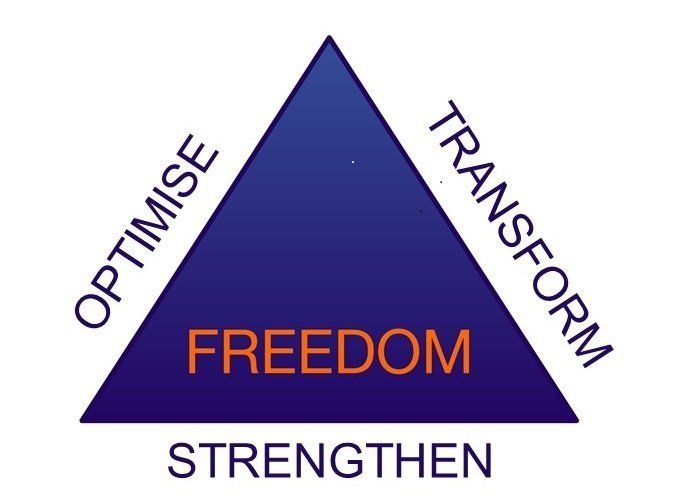
Wood and Disney's Technology and Performance Framework
Business Process Review
Understanding how work currently flows through the business and identifying inefficiencies.
Technology & Systems Strategy
Assessing where technology can create measurable improvements in performance.
AI & Automation Implementation
Applying practical solutions that improve productivity, visibility and decision-making.
Continuous Improvement & Future Readiness
Ensuring systems evolve alongside the business and emerging technology.
How Can AI Help Businesses Improve Efficiency And Profitability?
Artificial intelligence is rapidly becoming one of the most significant business technologies available. While the opportunities are substantial, the greatest value often comes from solving practical business problems rather than adopting AI for its own sake.
- Automating Repetitive Work: AI can significantly reduce the time spent on repetitive administrative tasks such as document processing, data entry, scheduling and information management. This allows teams to focus on activities that generate greater value.
- Accelerating Information Processing: AI can quickly analyse, summarise and organise large volumes of information, making it easier for businesses to access insights and identify opportunities.
- Improving Decision Support: AI tools can help identify patterns, trends and anomalies within business data, supporting more informed and timely decision-making.
- Enhancing Customer Communication: AI can assist with customer enquiries, improve response times and provide more consistent communication across multiple channels.
- Supporting Marketing Activities: AI can support research, content creation, campaign planning and customer analysis, helping businesses improve marketing effectiveness while reducing manual effort.
- Improving Knowledge Access: Businesses often hold valuable information across multiple systems and documents. AI can help organise and retrieve this information more efficiently, improving productivity and decision-making.
The most effective AI implementations focus on solving practical business problems and creating measurable benefits rather than adopting technology simply because it is available.
How Do Business Owners Know Which Technology Investments Are Worth Making?
One of the biggest challenges facing business owners is deciding which technologies will genuinely improve the business and which may simply create additional cost and complexity.
- Alignment With Business Objectives: Technology should support clearly defined business goals rather than being adopted simply because it is new or popular.
- Measurable Benefits: Potential improvements in efficiency, profitability, customer experience or decision-making should be identifiable and measurable.
- Ease Of Adoption: Even excellent technology can fail if teams do not understand it or use it effectively. Successful implementation depends on people as much as software.
- Integration With Existing Systems: New solutions should work effectively alongside current systems and processes to avoid creating additional complexity.
- Scalability: Technology should be capable of supporting future growth and evolving business requirements.
- Return On Investment: Expected benefits should justify the required investment of time, resources and money.
The best technology investments solve genuine business problems and create measurable value over time.
Reactive Technology Adoption vs Strategic Technology Investment
| Reactive Approach | Strategic Approach | |
|---|---|---|
| Technology | Trend driven | Objective driven |
| Systems | Disconnected | Integrated |
| AI | Experimentation | Business focused |
| Efficiency | Accidental | Planned |
| Performance | Uncertain | Measurable |
Take Back Control Of Business Performance
Technology should support the business rather than dominate it.
When systems, processes and technology are aligned with business objectives, owners gain better visibility, improved efficiency and greater confidence in decision-making. The result is a business that is more profitable, more resilient and better prepared for future opportunities.
The goal is not simply adopting new technology. It is using technology intelligently to create a stronger business.
What Areas Of A Business Benefit Most From Technology?
Technology can improve many areas of a business, but the greatest value usually comes from focusing on the systems, processes and information flows that most affect performance, capacity and decision-making.
- Financial Management: Technology can improve reporting, forecasting, budgeting and financial visibility, helping owners make better-informed decisions.
- Customer Experience: Improved communication, faster response times and more consistent service often lead to stronger customer relationships.
- Sales & Marketing: Technology can support lead generation, customer engagement and marketing effectiveness while reducing manual effort.
- Operations: Automation and improved workflows help reduce inefficiencies, minimise duplication and improve productivity.
- Team Collaboration: Modern systems improve communication, information sharing and coordination across teams.
- Reporting & Decision-Making: Access to timely information supports faster and more effective decision-making.
- Compliance & Administration: Technology can simplify record-keeping, reporting and administrative processes while reducing the risk of errors.
Technology creates the greatest value when it supports the wider growth strategy and improves multiple areas of business performance at the same time.
Discover more:
How Can Businesses Become More Future Ready?
- Create Sustainable Competitive Advantage: Businesses that successfully adopt appropriate technology often improve customer experience, operational efficiency and decision-making. Over time, these improvements can create meaningful advantages over competitors who are slower to adapt.
- Embrace Continuous Improvement: Businesses that regularly review systems, processes and performance are often better positioned to adapt to changing circumstances.
- Invest in Digital Capability: Technology skills and digital confidence are becoming increasingly important competitive advantages.
- Build Flexible Systems: Adaptable systems allow businesses to respond more quickly to changes in customer expectations, market conditions and technology.
- Monitor Emerging Technologies: Understanding technological developments helps businesses identify opportunities and prepare for future change.
- Focus on Business Outcomes: Technology should always support broader strategic objectives rather than becoming an objective in its own right.
- Seek Independent Advice: External perspective can help businesses identify opportunities, challenge assumptions and avoid costly mistakes.
- Balance Innovation with Practicality: Not every new technology deserves investment. The most successful businesses focus on solutions that create genuine value.
Future-ready businesses are not necessarily the first to adopt every innovation. They are often the businesses that consistently identify and implement the technologies that create genuine value.
Future-ready businesses are usually more resilient, less owner-dependent and better positioned to create long-term value.
Discover more:
Frequently Asked Questions:
How Can Technology Improve Profitability?
Technology can improve profitability by reducing wasted time, improving accuracy, automating repetitive work and giving business owners better visibility of performance. The greatest gains usually come when technology supports stronger processes rather than simply adding another piece of software.
Profitability may improve when systems reduce manual administration, speed up invoicing, improve stock or project control, strengthen customer service, reduce errors, support better reporting or allow teams to handle more work without increasing costs at the same rate. Better information also helps owners identify weak margins, inefficient processes and opportunities to improve pricing or productivity.
Technology should be judged by business outcomes. The aim is not to become more digital for its own sake, but to improve efficiency, decision-making, scalability and financial performance.
How Can Technology Help My Business Grow?
Technology can help a business grow by increasing capacity, improving consistency and giving the owner better information for decision-making. Growth often creates more complexity, and systems that worked when the business was smaller may become a constraint as workload, customers, staff and transactions increase.
Good technology can reduce duplicated work, improve workflow, strengthen communication, support customer management, automate routine tasks and provide more reliable reporting. This allows the business to grow without every extra sale creating the same level of extra administration or owner involvement.
Technology is most valuable when it supports a clear growth strategy. It should help the business become more scalable, less dependent on individuals and better able to maintain quality as complexity increases.
What Does It Mean To Be Future Ready?
A future-ready business is able to adapt to changing markets, technology, customer expectations, regulation and owner priorities without losing control. It has the systems, information, people and decision-making capability needed to respond to change rather than simply react under pressure.
Future readiness is not about adopting every new technology. It is about building a business that can keep improving, use information effectively, reduce dependency on the owner and make confident decisions as circumstances change.
Technology plays an important role because it can strengthen visibility, efficiency, communication, reporting and scalability. But future readiness also depends on strategy, leadership, financial control and a willingness to review how the business works.
How Do I Know If AI Is Right For My Business?
Most businesses can benefit from AI in some form, but the opportunities vary depending on their objectives, systems and processes. Rather than asking whether AI is right for the business, owners often benefit from identifying specific challenges that AI could help solve, such as reducing administration, improving customer communication, increasing productivity or providing better access to information.
How Can AI Help My Business?
AI can help a business by reducing repetitive work, improving access to information, speeding up administrative tasks and supporting better decision-making. The greatest value usually comes from applying AI to specific business problems rather than adopting it because it is fashionable.
Practical uses may include summarising information, drafting routine communications, analysing data, improving customer response times, supporting marketing, streamlining administration, identifying patterns in financial or operational information and helping teams work more efficiently.
AI is most useful when the underlying systems and data are reliable. If information is disorganised, duplicated or inaccurate, AI may simply make poor processes faster. For that reason, business owners should look first at where time is being wasted, where information is difficult to access and where repetitive tasks are limiting capacity.
The aim is not to replace judgement. It is to help the business use information, time and people more effectively so that owners and teams can focus on higher-value work.
Do Small Businesses Need AI?
Small businesses do not need AI for its own sake, but many can benefit from using AI carefully where it solves a real problem. The question is not whether every small business needs AI, but whether AI can help the business reduce administration, improve productivity, strengthen communication or make better use of information.
For owner-managed businesses, AI may be useful where the owner or team spends too much time on repetitive tasks, manual reporting, customer communication, marketing, document preparation or information processing. Even modest improvements can release time and improve consistency.
However, AI should be introduced with clear objectives, good data, appropriate oversight and an understanding of risk. It should support business performance, not create unnecessary complexity.
The best starting point is to identify specific bottlenecks in the business and ask whether technology, automation or AI could remove friction, improve quality or increase capacity.
How Do I Know If My Current Systems Are Holding My Business Back?
Current systems may be holding a business back if they create duplicated work, manual administration, poor visibility, slow reporting, inconsistent customer experience or excessive reliance on the owner. These problems often become more obvious as the business grows.
Common warning signs include entering the same information into multiple places, relying on spreadsheets for critical processes, struggling to access accurate financial information, delays in reporting, poor integration between systems, unclear responsibilities and teams creating workarounds because existing processes no longer fit.
Systems should support capacity, consistency and decision-making. If they make it harder to serve customers, manage cash flow, monitor performance, delegate work or scale the business, they are no longer simply an inconvenience. They are a constraint on performance.
A systems review should therefore consider not only software, but also processes, people, information flow, reporting and the owner’s long-term objectives.
What Technology Should Small Businesses Be Using?
The right technology depends on the business’s objectives, size, processes, customers and growth plans. Most small and owner-managed businesses benefit from reliable accounting software, secure document storage, customer management tools, efficient communication systems and reporting that gives clear visibility of performance.
However, the starting point should not be a list of software. It should be the business problem that needs solving. A business may need better financial visibility, faster invoicing, improved customer follow-up, stronger project control, more efficient payroll, better team communication or less manual administration.
The best technology choices are practical, integrated and aligned with the business plan. They should reduce friction, improve control and support better decisions rather than create extra complexity.
How Do I Decide Which Technology Investments Are Worth Making?
Technology investments should be judged by whether they support the business’s objectives, improve performance and create measurable value. The best technology is not always the newest or most fashionable. It is the technology that solves the right problem.
Before investing, business owners should ask what the technology is intended to improve. The answer might be efficiency, reporting, customer service, financial visibility, team capacity, scalability, compliance, profitability or owner time. If the expected benefit is unclear, the investment is likely to disappoint.
Technology should also be assessed against cost, implementation effort, integration with existing systems, team capability, data quality, risk and scalability. A system that looks attractive in isolation may create more complexity if it does not fit the way the business operates.
The strongest technology decisions are linked to strategy. They help the business become more efficient, more visible, less owner-dependent and better prepared for future growth.
Will AI Replace Employees?
In most owner-managed businesses, AI is more likely to change how people work than replace the team entirely. AI can reduce repetitive administration, speed up information processing, support drafting, summarise data and help employees focus on higher-value work.
The real question is how AI can improve productivity, quality and capacity while keeping appropriate human judgement. Many business activities still require relationships, technical expertise, commercial judgement, empathy, accountability and decision-making that should not be handed over blindly to technology.
Business owners should treat AI as a tool to support people, not as a shortcut to remove them. Used carefully, it can help teams work more effectively, improve consistency and release time for more valuable activities.
How Can I Keep Up With Rapid Technological Change?
Business owners do not need to adopt every new technology. The most effective approach is to review technology regularly through the lens of business objectives, performance, risk and value.
Rather than chasing trends, owners should ask whether a new system or tool could improve efficiency, financial visibility, customer experience, team capacity, compliance, profitability or scalability. If the answer is unclear, the investment may not be worthwhile.
Keeping up with change also means building digital confidence within the business. This can involve reviewing systems, training staff, improving data quality, testing small improvements and seeking independent advice before major investment. The aim is to remain informed and adaptable without being distracted by every new development.
Take Your Next Step
Wood and Disney works with established owner-managed businesses across Colchester, Essex and the UK to use systems and technology to improve business performance.
A business built on strong systems becomes less dependent on the owner, more resilient and more valuable over time.
These are the foundations of long-term business value and future freedom.